

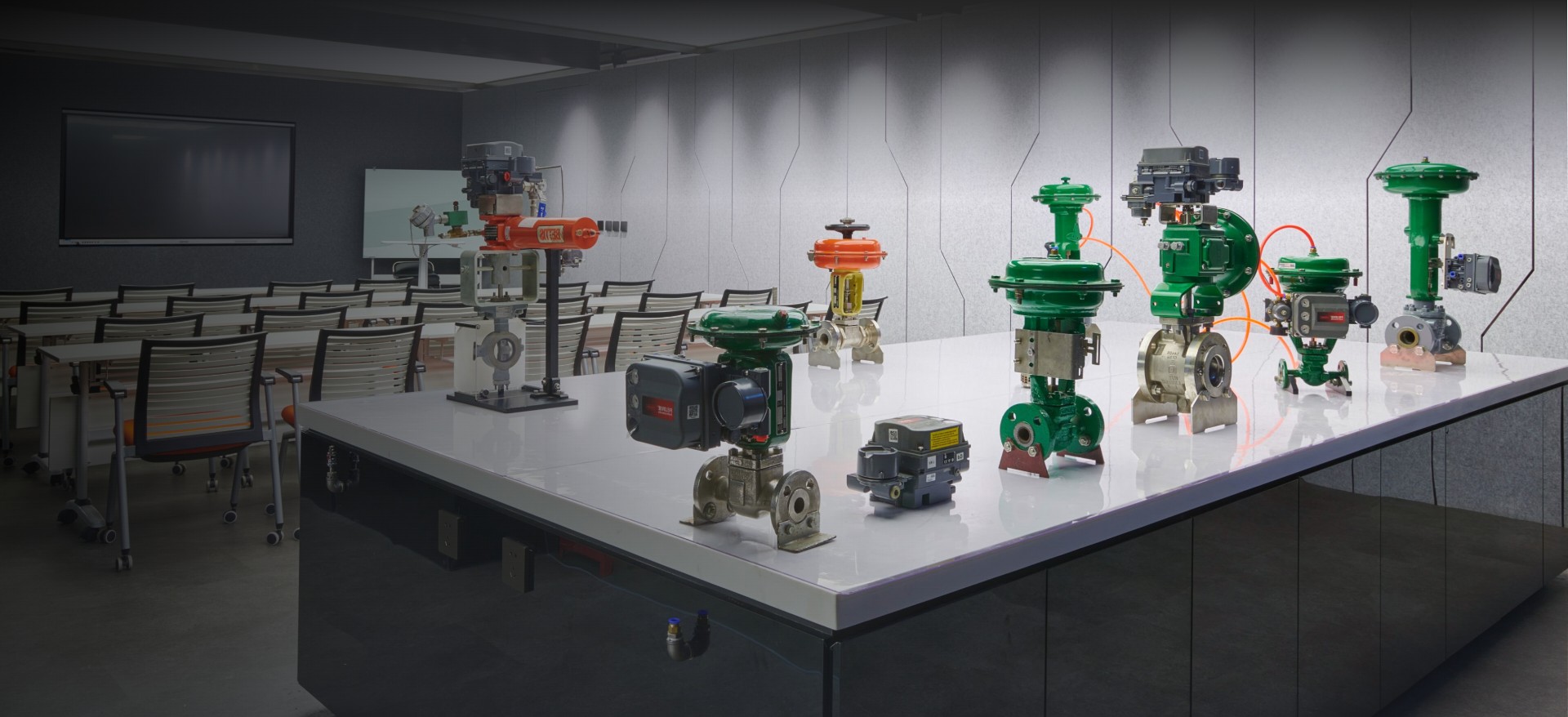
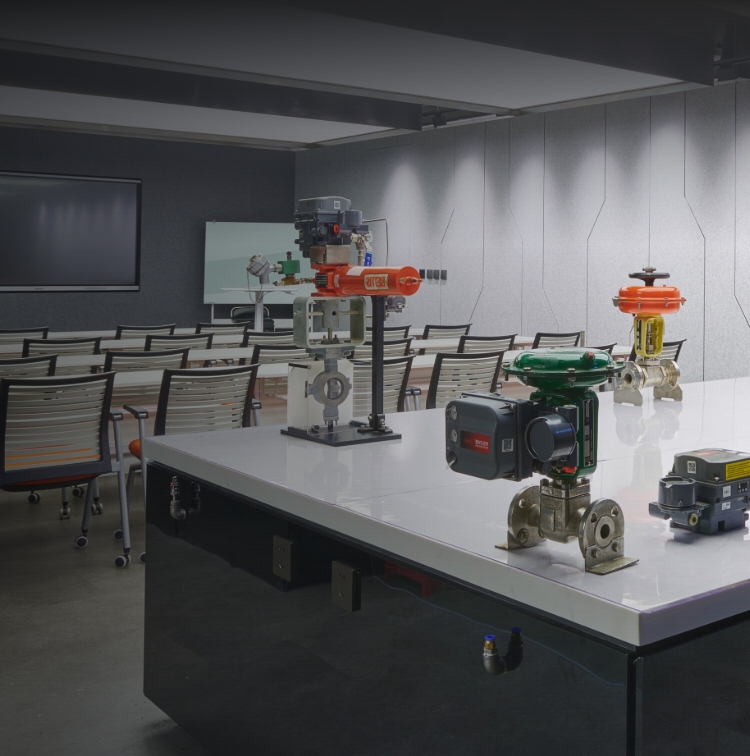
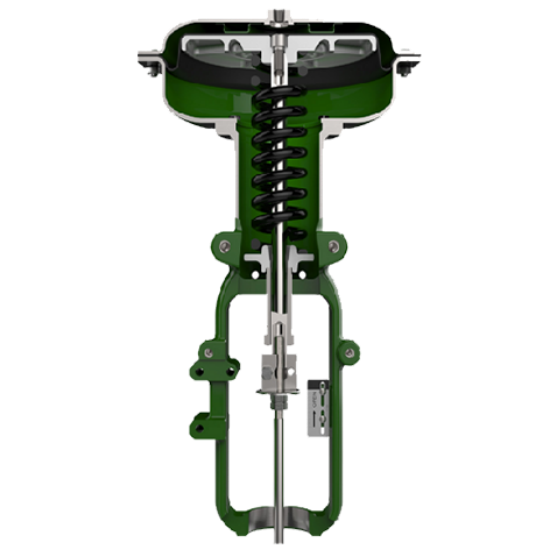
Fisher 657 and 667 spring-opposed diaphragm actuators position the valve plug in the valve in response to varying controller or valve positioner pneumatic output signals applied to the actuator diaphragm. Zero setting of the actuator is determined by the compression of the actuator spring. Span is set by both the actuator spring rate and the number of springs available. The 657 actuator is direct-acting; the 667 is reverse-acting. These actuators are designed to provide dependable on-off or throttling operation of automatic control valves.
Five actuator types in eleven sizes are available for an extensive variety of
applications. Spring rates, travel stops, and manual operators are available for nearly any control valve application.
A molded diaphragm travels in a deep diaphragm casing, minimizing area change throughout the travel.
A shallow casing on the pressure side means reduced volume on that side, thereby
minimizing response time.
The molded diaphragm allows maximum thrust for given diaphragm size.
Rugged thick-walled cast iron and steel construction provides increased stability, corrosion protection, and protection from deformation should over-pressurization occur.
Enhanced product specifications for all sizes of 657 and 667 diaphragm actuators allow performance to -50℃ (-58℉). Use of a positioner is recommended to ensure responsiveness in applications operating below -40℃ (-40℉).
A split block stem connection provides a solid transfer of motion while allowing
easy mounting. The absence of linkages helps to avoid lost motion and inaccurate valve positioning.
Standard Construction (Nitrile Elastomers): -40 to 82℃ (-40 to 180℉)
Optional Construction (Silicone Diaphragm): -40 to 149℃ (-40 to 300℉)
Maximum Valve Packing Box Temperature: 427℃(800℉) with cast iron yoke

Tel: 021-33505868
Add: No.1239 Shuhai Road, Songjiang District, Shanghai China

Follow SC on Official
Social Account

Follow SC on
Video Channel


